



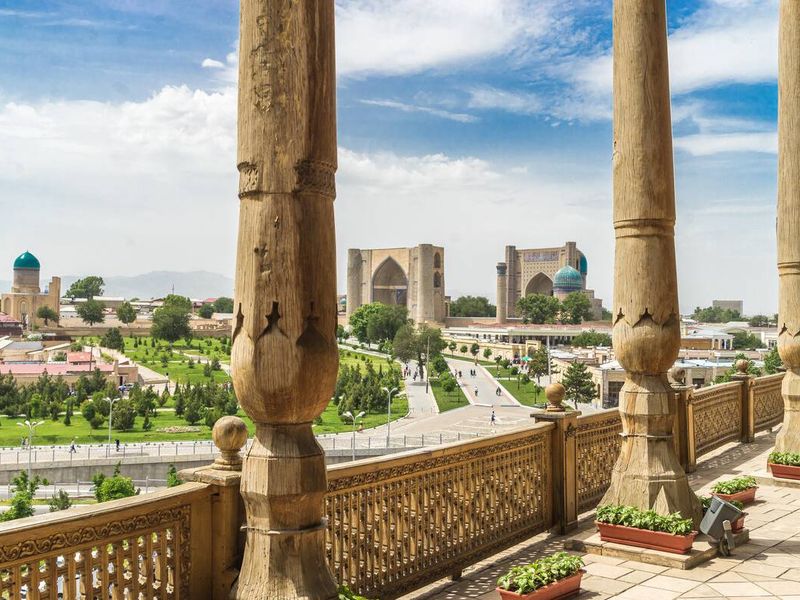
Getting to know Uzbekistan — the heart of the Silk Road
Uzbekistan is the cradle of ancient civilizations and a center of the Islamic world. Its history spans millennia, leaving behind numerous archaeological monuments, majestic mosques, madrasahs and mausoleums. The country was home to great scholars, philosophers, poets and rulers such as Amir Temur (Tamerlane), Imam al-Bukhari, Avicenna (Ibn Sina) and Ulugh Beg.
Uzbek culture is a vivid kaleidoscope of traditions, folk crafts, music, dance and cuisine. Pottery, silk weaving, wood carving, miniature painting and metalworking flourish here.
Main tourist cities and attractions
Buying a tour of Uzbekistan means diving into the atmosphere of an eastern fairy tale.
- Samarkand — "Pearl of the East" and one of the oldest cities in the world, a UNESCO World Heritage Site.
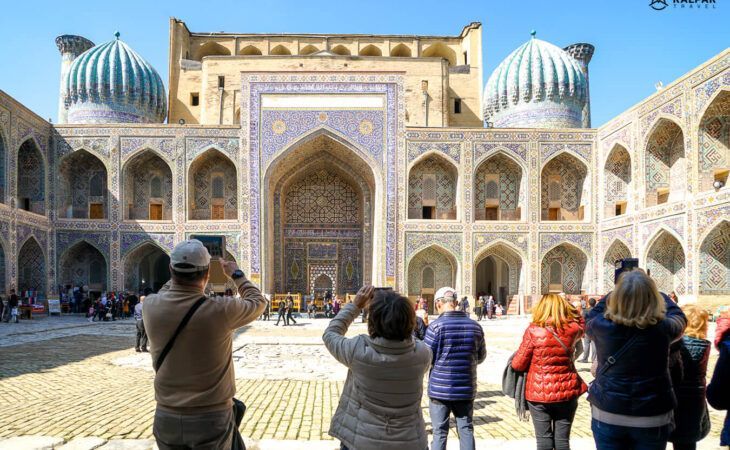
- Registan — Samarkand's calling card, an ensemble of three magnificent madrasahs (Ulugh Beg, Sher-Dor, Tillya-Kari).
- Bibi-Khanym Mosque — a grand congregational mosque built by order of Amir Temur.
- Gur-e-Amir Mausoleum — the tomb of Amir Temur and his descendants.
- The Shahi-Zinda necropolis — a striking architectural ensemble of mausoleums decorated with unique glazed tiles (majolica).
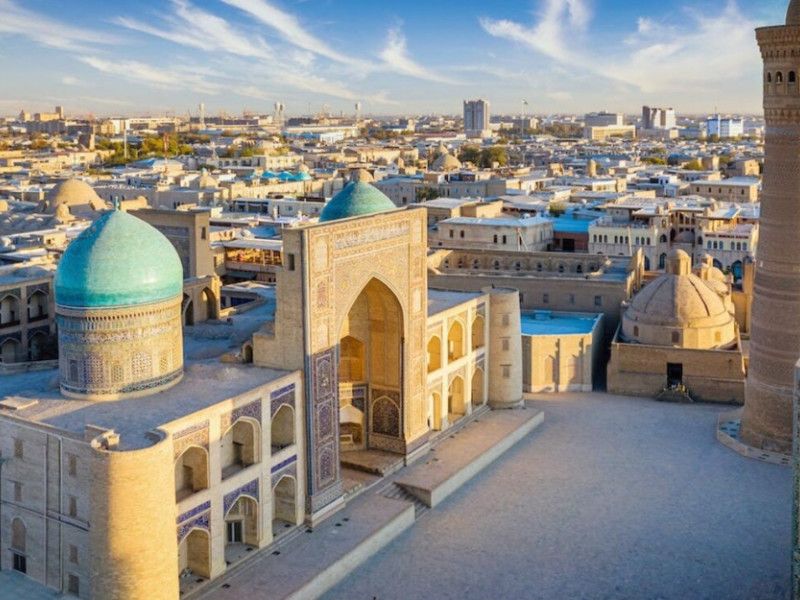
- Bukhara, or as it's also called "Sacred Bukhara" — another UNESCO World Heritage Site, an open-air museum city.
- Poi-Kalyan Complex — includes the Kalyan minaret, Kalyan Mosque and the Mir-i-Arab madrasah.
- Lyabi-Hauz — a picturesque architectural ensemble around a pond, surrounded by madrasahs and a khanaka.
- Samanid Mausoleum — a masterpiece of 9th–10th century architecture.
- Trading domes — ancient market arcades where you can still buy souvenirs and handicrafts.
- Khiva — an "Open-air museum" and a UNESCO World Heritage Site, preserving its unique inner fortress Ichan-Kala.
- Ichan-Kala — the fortress walls surrounding the old town, inside which are madrasahs, mosques, minarets and palaces.
- Kalta-Minor minaret — unfinished but very beautiful, faced with turquoise tiles.
- Muhammad Amin-khan Madrasa — one of Khiva's largest madrasahs.
- Tashkent. The capital of Uzbekistan, a modern metropolis combining ancient monuments with contemporary architecture.
- Khast-Imam Complex — Tashkent's spiritual center with a mosque, a madrasah and one of the oldest Qur'ans attributed to Uthman.
- The Museum of Applied Arts showcases the rich heritage of Uzbek crafts.
- The Tashkent metro is famous for its beauty and unique station designs.
- Shakhrisabz — the birthplace of Amir Temur, also a UNESCO site, with the ruins of the Ak-Saray palace and mausoleums.
- Termez — an ancient city in southern Uzbekistan, a center of Buddhist culture.
- Fergana Valley — a picturesque region known for its craft centers (Rishtan ceramics, Margilan silk) and fertile lands.
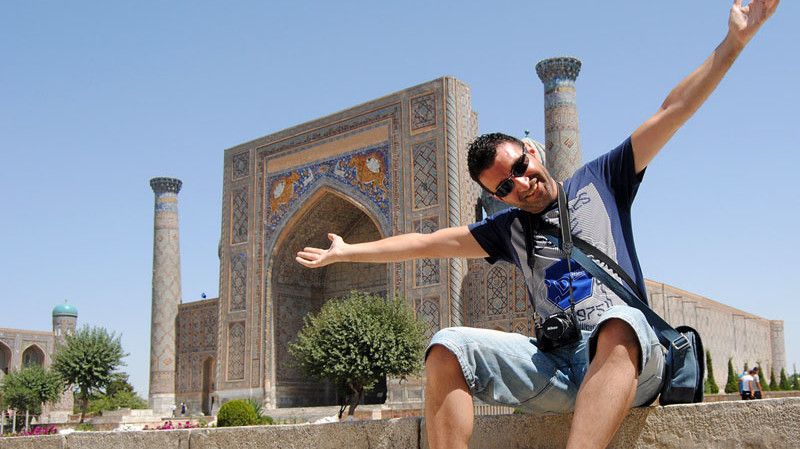
Types of tourism in Uzbekistan
Located in the heart of the Great Silk Road, Uzbekistan actively develops its tourism industry, offering travelers a wide range of experiences. Thanks to its rich historical heritage, unique culture, diverse natural landscapes and hospitality, the country becomes an attractive destination for various kinds of tourism:
- Pilgrimage tourism (Ziyorat-tourism). Visiting sacred sites connected to prominent Islamic figures.
- Gastronomic tourism. Getting to know the rich and varied Uzbek cuisine (plov, samsa, lagman, shashlik).
- Ecotourism. Trips to nature reserves, mountains and deserts (for example, the Nuratau–Kyzylkum Biosphere Reserve).
- Active tourism. Trekking in the Chimgan mountains, river rafting.
- Cultural and educational tourism. The main type aimed at studying history and architecture, for which most tours to Uzbekistan are bought.
Practical information
- Visa: Uzbekistan is actively simplifying its visa regime for citizens of many countries. For citizens of some countries a visa-free regime has been introduced, for others there are simplified electronic visa procedures. Recently there have been talks about simplifying visa processes for Canada, Argentina and Australia.
- Currency: the national currency is the Uzbek som (UZS). Currency exchange is available at banks and exchange offices.
- The best time to buy a tour to Uzbekistan is spring (April–May) and autumn (September–October), when the weather is most comfortable for excursions. Summer can be very hot, winter — chilly.
- Transport. Between major cities it's convenient to travel on high-speed Afrosiyob trains that connect Tashkent, Samarkand, Bukhara and Karshi. Bus and domestic air services are also well developed.
- Cuisine. Uzbek cuisine is an attraction in itself. Be sure to try plov, samsa, lagman, shashlik, shurpa and manti.
- Hospitality. Uzbeks are famous for their hospitality and warmth.
Uzbekistan is a country that will leave unforgettable impressions thanks to its unique atmosphere, ancient mysteries and modern development.
"}{"content":"Uzbekistan is the cradle of ancient civilizations and a center of the Islamic world. Its history spans millennia, leaving behind numerous archaeological monuments, majestic mosques, madrasahs and mausoleums. The country was home to great scholars, philosophers, poets and rulers such as Amir Temur (Tamerlane), Imam al-Bukhari, Avicenna (Ibn Sina) and Ulugh Beg.
Uzbek culture is a vivid kaleidoscope of traditions, folk crafts, music, dance and cuisine. Pottery, silk weaving, wood carving, miniature painting and metalworking flourish here.
Main tourist cities and attractions
Buying a tour of Uzbekistan means diving into the atmosphere of an eastern fairy tale.
- Samarkand — "Pearl of the East" and one of the oldest cities in the world, a UNESCO World Heritage Site.
- Registan — Samarkand's calling card, an ensemble of three magnificent madrasahs (Ulugh Beg, Sher-Dor, Tillya-Kari).
- Bibi-Khanym Mosque — a grand congregational mosque built by order of Amir Temur.
- Gur-e-Amir Mausoleum — the tomb of Amir Temur and his descendants.
- The Shahi-Zinda necropolis — a striking architectural ensemble of mausoleums decorated with unique glazed tiles (majolica).
- Bukhara, or as it's also called "Sacred Bukhara" — another UNESCO World Heritage Site, an open-air museum city.
- Poi-Kalyan Complex — includes the Kalyan minaret, Kalyan Mosque and the Mir-i-Arab madrasah.
- Lyabi-Hauz — a picturesque architectural ensemble around a pond, surrounded by madrasahs and a khanaka.
- Samanid Mausoleum — a masterpiece of 9th–10th century architecture.
- Trading domes — ancient market arcades where you can still buy souvenirs and handicrafts.
- Khiva — an "Open-air museum" and a UNESCO World Heritage Site, preserving its unique inner fortress Ichan-Kala.
- Ichan-Kala — the fortress walls surrounding the old town, inside which are madrasahs, mosques, minarets and palaces.
- Kalta-Minor minaret — unfinished but very beautiful, faced with turquoise tiles.
- Muhammad Amin-khan Madrasa — one of Khiva's largest madrasahs.
- Tashkent. The capital of Uzbekistan, a modern metropolis combining ancient monuments with contemporary architecture.
- Khast-Imam Complex — Tashkent's spiritual center with a mosque, a madrasah and one of the oldest Qur'ans attributed to Uthman.
- The Museum of Applied Arts showcases the rich heritage of Uzbek crafts.
- The Tashkent metro is famous for its beauty and unique station designs.
- Shakhrisabz — the birthplace of Amir Temur, also a UNESCO site, with the ruins of the Ak-Saray palace and mausoleums.
- Termez — an ancient city in southern Uzbekistan, a center of Buddhist culture.
- Fergana Valley — a picturesque region known for its craft centers (Rishtan ceramics, Margilan silk) and fertile lands.
Types of tourism in Uzbekistan
Located in the heart of the Great Silk Road, Uzbekistan actively develops its tourism industry, offering travelers a wide range of experiences. Thanks to its rich historical heritage, unique culture, diverse natural landscapes and hospitality, the country becomes an attractive destination for various kinds of tourism:
- Pilgrimage tourism (Ziyorat-tourism). Visiting sacred sites connected to prominent Islamic figures.
- Gastronomic tourism. Getting to know the rich and varied Uzbek cuisine (plov, samsa, lagman, shashlik).
- Ecotourism. Trips to nature reserves, mountains and deserts (for example, the Nuratau–Kyzylkum Biosphere Reserve).
- Active tourism. Trekking in the Chimgan mountains, river rafting.
- Cultural and educational tourism. The main type aimed at studying history and architecture, for which most tours to Uzbekistan are bought.
Practical information
- Visa: Uzbekistan is actively simplifying its visa regime for citizens of many countries. For citizens of some countries a visa-free regime has been introduced, for others there are simplified electronic visa procedures. Recently there have been talks about simplifying visa processes for Canada, Argentina and Australia.
- Currency: the national currency is the Uzbek som (UZS). Currency exchange is available at banks and exchange offices.
- The best time to buy a tour to Uzbekistan is spring (April–May) and autumn (September–October), when the weather is most comfortable for excursions. Summer can be very hot, winter — chilly.
- Transport. Between major cities it's convenient to travel on high-speed Afrosiyob trains that connect Tashkent, Samarkand, Bukhara and Karshi. Bus and domestic air services are also well developed.
- Cuisine. Uzbek cuisine is an attraction in itself. Be sure to try plov, samsa, lagman, shashlik, shurpa and manti.
- Hospitality. Uzbeks are famous for their hospitality and warmth.
Uzbekistan is a country that will leave unforgettable impressions thanks to its unique atmosphere, ancient mysteries and modern development.














