



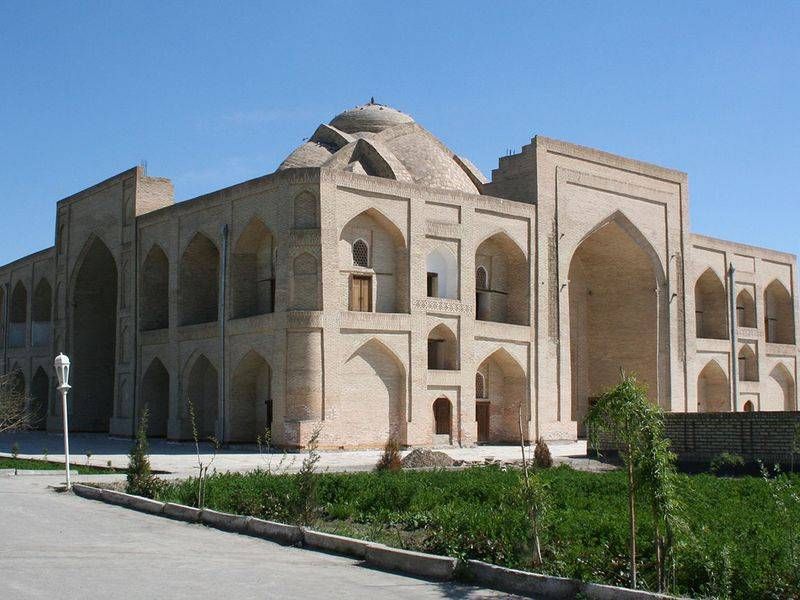
Bukhara attractions — the Nakshbandi complex
The Bahauddin Naqshband complex, located a few kilometers from Bukhara, is one of the most revered holy sites in Uzbekistan and an important center of Sufism. Sheikh Bahauddin Naqshband (1318-1389) was the founder of the influential Sufi order Naqshbandiyya. Originally there was a settlement called Kasri Orifon on this site. After Bahauddin Naqshbandi's death in 1389 he was buried here, and the place gradually became sacred. The construction of the memorial complex began about 150 years after his death, in the 16th century, during the reign of Abdulaziz Khan of the Shaybanid dynasty. If you've bought a tour to Bukhara, you really should visit it.

The ensemble of the Bahauddin Naqshband complex includes several religious and memorial structures arranged around a rectangular courtyard where the sheikh's tomb is located:
- Mausoleum of Bahauddin Naqshband — the modest tomb of the saint, which is the center of the whole complex.
- Khanaka — a large building for gatherings of Sufis and pilgrims with a high domed roof supported by projecting arches.
- Hakim Kushbegi Mosque, built in the 19th century by the vizier Nasrulla Khan.
- Arslan Khan Mosque, rebuilt in the 14th century, featuring an arched-domed gallery from the 16th century and a mihrab decorated with brick and carved terracotta.
- Minaret — a tower built in 1720.
- Darwazakhana — an entrance hall with a high dome, built during Uzbekistan's independence period.
- Dakhmai Shokhon (Necropolis of rulers) — the burial place where the remains of some rulers from the Timurid, Shaybanid, Ashtarkhanid and Mangit dynasties rest.
- Iwans: traditional terraces with wooden columns surrounding the courtyard.
- Hauz (pool).
- Bahauddin Naqshbandi Museum, dedicated to the life and teachings of the sheikh, with exhibits related to Sufism.
- A landscaped garden connecting the different parts of the complex.

The entrance to the complex is very beautiful, and if you've bought a tour to Bukhara and step inside, you'll immediately feel the full scale of the building. The complex includes two mosques with minarets, mausoleums of Bukhara's rulers and the mausoleum of Naqshbandi himself. The mosques are very beautiful, the walls are entirely covered with tiles, and low-hanging chandeliers with bulbs light up the whole space perfectly. The mosques are spacious and bright. Participants of guided tours can visit the mosque, but only when a service is not taking place; otherwise tourists will not be allowed inside. When entering the mosque you should take off your shoes and women should cover their heads — basically the same rules as in other Muslim mosques.
You can also visit the museum here, where you can look at plates and other historical items from Bukhara, showing how locals cooked many years ago. The museum also displays items like the clothing of Sufis from those times. It's fascinating to see garments from that era preserved in such good condition.
There are always people here and many come specifically to pray. It's also believed that if you make a wish here, it will certainly come true, because Allah will hear everyone in this holy place.
There is a tree trunk in the complex where locals constantly gather, which suggests that it is some kind of sacred tree.

The Bahauddin Naqshbandi complex is a harmonious mix of religious buildings from different eras, reflecting the development of the region's architectural traditions. Visiting it is an important experience for pilgrims and is especially interesting for those who have bought a tour to Bukhara and want to learn about the history and spiritual culture of Uzbekistan. Today this complex is listed as part of UNESCO's heritage, so be sure to visit — it will definitely leave an impression on your memory.














