



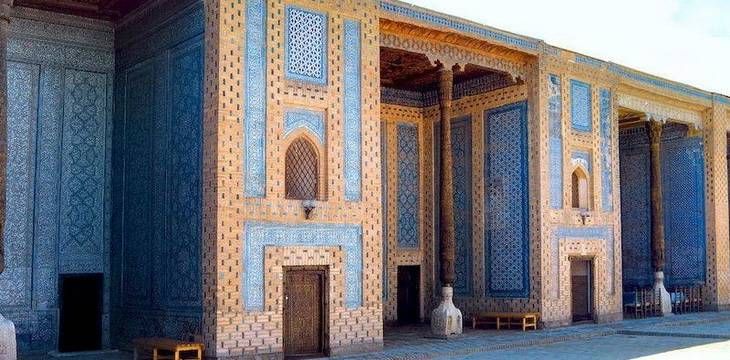
Discover the splendour of Tash-Hauli — the pearl of Khiva
Tash-Hauli (Tash-Hauli) is an impressive palace complex located in the city of Khiva, Uzbekistan, within the Ichan-Kala fortress (a UNESCO World Heritage site). Its name translates as "Stone Courtyard" or "Stone Palace". A tour to Khiva without visiting this architectural monument would be incomplete.
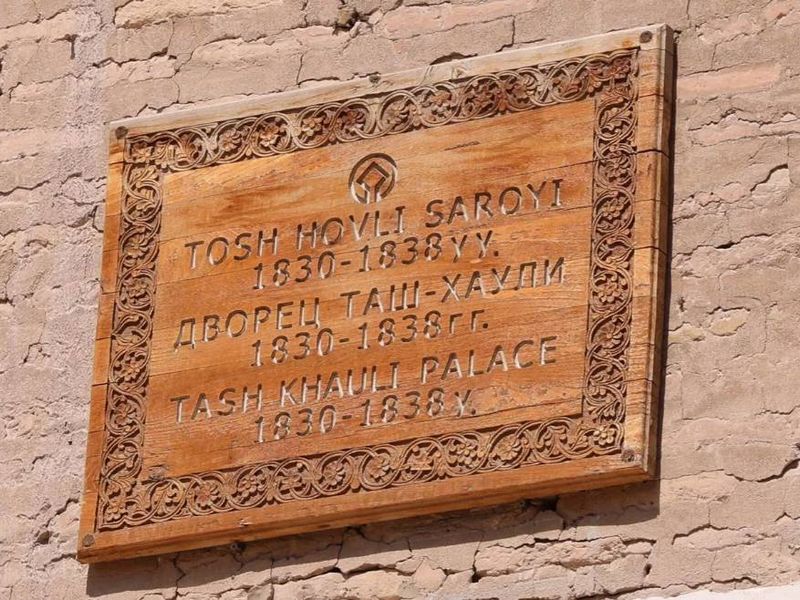
History and construction:
- Built between 1830 and 1841 by order of Allakuli-khan, the ruler of the Khiva Khanate.
- Construction lasted about 8 years, although the khan initially demanded the work be finished in 2 years — a demand that, according to legend, cost some craftsmen their lives.
- Tash-Hauli became the main residence of the Khivan khans in the 19th century, marking the transfer of the royal residence from Kunya-Ark to the eastern part of Ichan-Kala.
Architecture and layout:
- A huge complex covering roughly 80 by 80 metres, including more than 150 rooms and 9 courtyards.
- The palace has a rectangular plan with three main courtyards:
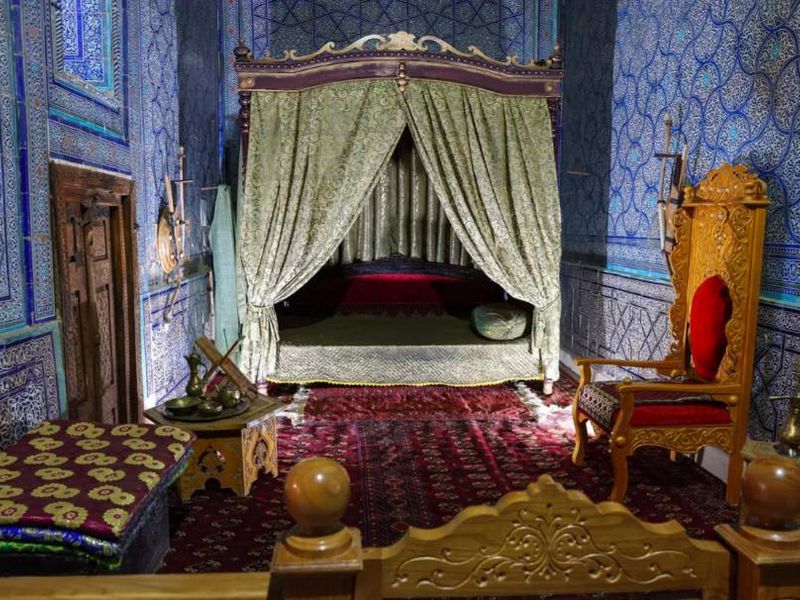
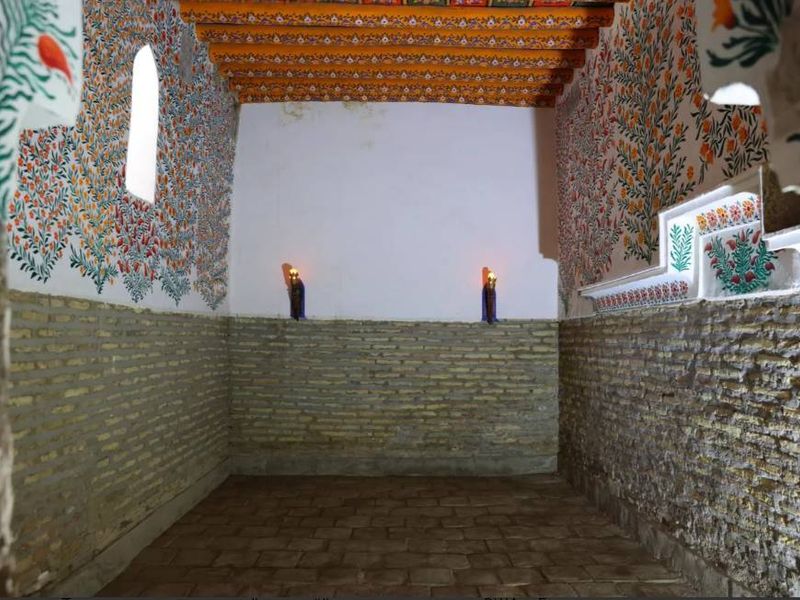
- Harem (Harem): Built first (1830-1834), it consisted of apartments for the khan, his four wives and more modest rooms for female relatives and servants.
- Ishrat Hauli (Ishrat Hauli) / Mehmonkhona (Mehmonkhona): A reception hall intended for official receptions and ceremonies.
- Arz Hauli (Arz Hauli): The courtyard of justice where the khan heard complaints and administered justice.
- The palace's exterior, with its high crenellated walls, corner towers and iron gates, resembles a fortified stronghold. However, the interiors facing the inner courtyards are richly decorated.
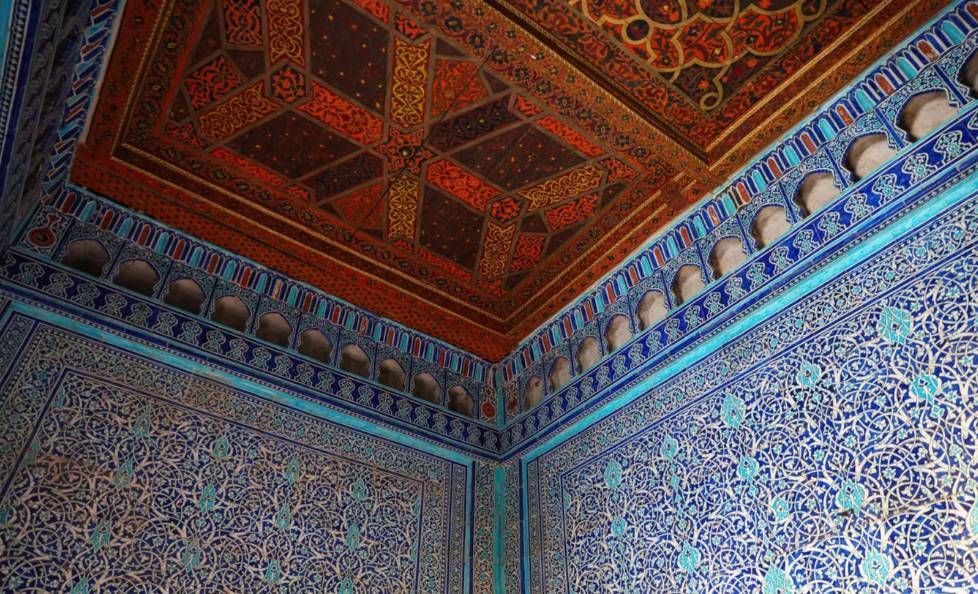
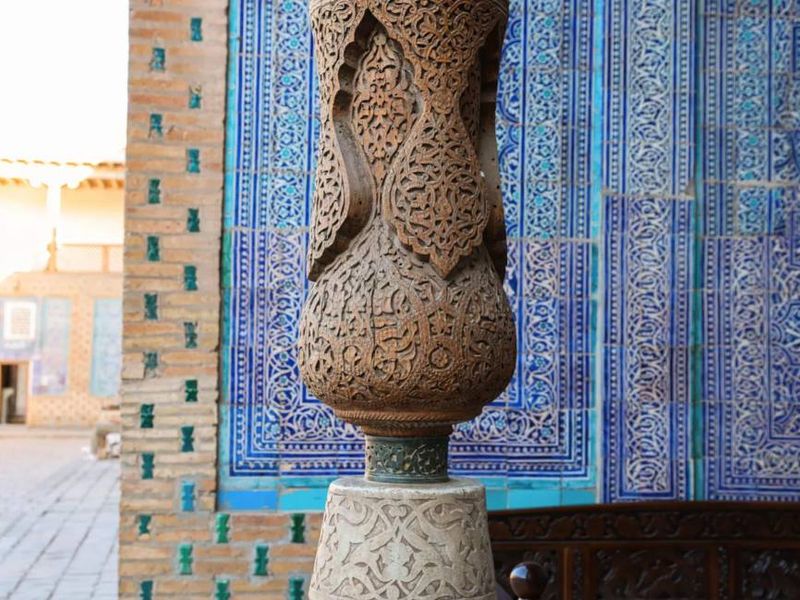
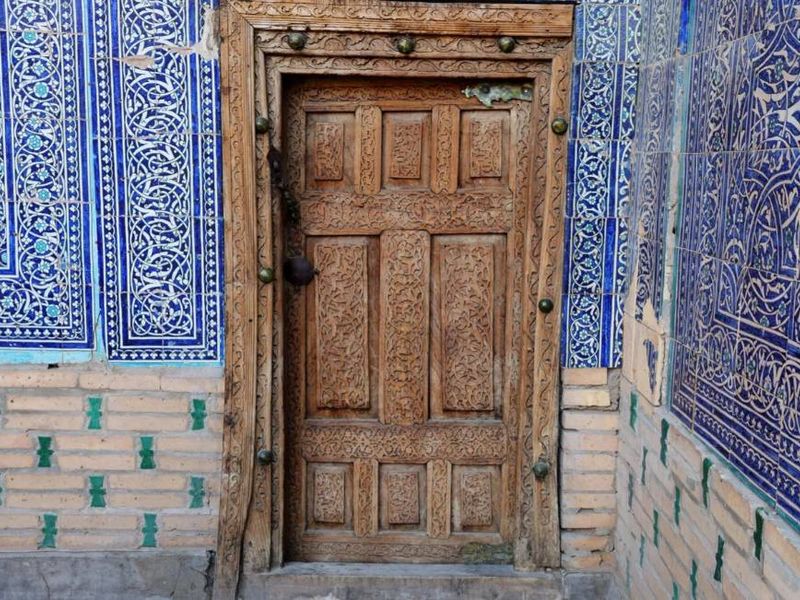
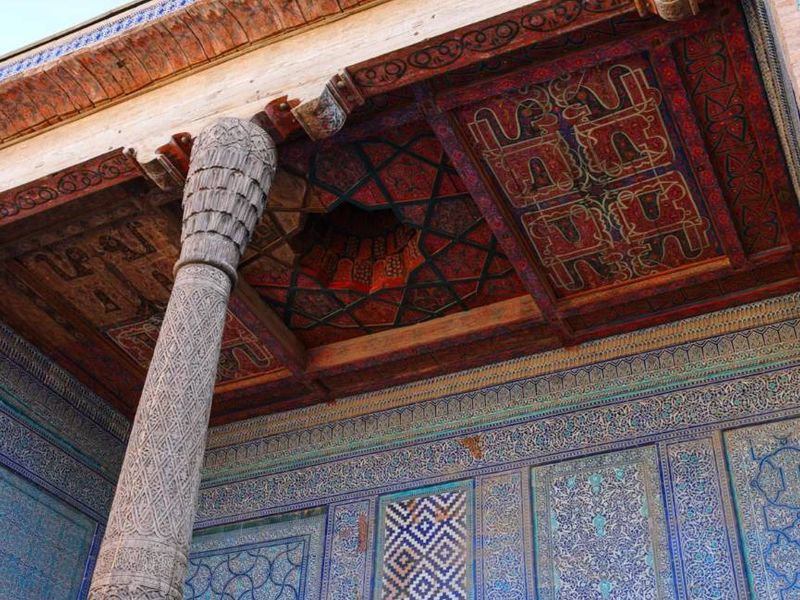
- The walls and facades of the inner courtyards are adorned with stunning majolica featuring carpet patterns in traditional blue, ultramarine and white tones. The decoration widely uses carved wood, stone, plaster and ceramic tiles. The majolica was made by the famous master Abdullah, nicknamed "Dzhin" ("The Genius").
Interesting facts:
- In one of the harem rooms a 19th-century carriage has been preserved. There's a story that a Russian stove-maker, invited to install the palace fireplaces, gifted this carriage to the khan. The khan's wives liked it so much that they insisted on it as a present.
- Some of the carved wooden ceilings, columns and doors were brought from older buildings, showcasing the high skill of Khorezm woodcarvers.
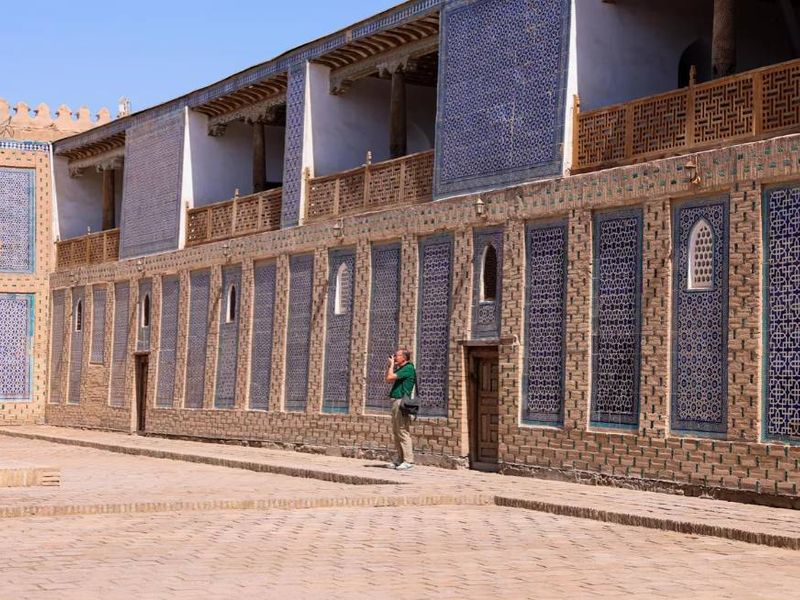
Tash-Hauli is an outstanding example of 19th-century Khorezm architecture, combining the practicality of living quarters with the splendour of palace halls. Visiting it during a tour to Khiva leaves an unforgettable impression.
"}{"content":"Tash-Hauli (Tash-Hauli) is an impressive palace complex located in the city of Khiva, Uzbekistan, within the Ichan-Kala fortress (a UNESCO World Heritage site). Its name translates as "Stone Courtyard" or "Stone Palace". A tour to Khiva without visiting this architectural monument would be incomplete.
History and construction:
- Built between 1830 and 1841 by order of Allakuli-khan, the ruler of the Khiva Khanate.
- Construction lasted about 8 years, although the khan initially demanded the work be finished in 2 years — a demand that, according to legend, cost some craftsmen their lives.
- Tash-Hauli became the main residence of the Khivan khans in the 19th century, marking the transfer of the royal residence from Kunya-Ark to the eastern part of Ichan-Kala.
Architecture and layout:
- A huge complex covering roughly 80 by 80 metres, including more than 150 rooms and 9 courtyards.
- The palace has a rectangular plan with three main courtyards:
- Harem (Harem): Built first (1830-1834), it consisted of apartments for the khan, his four wives and more modest rooms for female relatives and servants.
- Ishrat Hauli (Ishrat Hauli) / Mehmonkhona (Mehmonkhona): A reception hall intended for official receptions and ceremonies.
- Arz Hauli (Arz Hauli): The courtyard of justice where the khan heard complaints and administered justice.
- The palace's exterior, with its high crenellated walls, corner towers and iron gates, resembles a fortified stronghold. However, the interiors facing the inner courtyards are richly decorated.
- The walls and facades of the inner courtyards are adorned with stunning majolica featuring carpet patterns in traditional blue, ultramarine and white tones. The decoration widely uses carved wood, stone, plaster and ceramic tiles. The majolica was made by the famous master Abdullah, nicknamed "Dzhin" ("The Genius").
Interesting facts:
- In one of the harem rooms a 19th-century carriage has been preserved. There's a story that a Russian stove-maker, invited to install the palace fireplaces, gifted this carriage to the khan. The khan's wives liked it so much that they insisted on it as a present.
- Some of the carved wooden ceilings, columns and doors were brought from older buildings, showcasing the high skill of Khorezm woodcarvers.
Tash-Hauli is an outstanding example of 19th-century Khorezm architecture, combining the practicality of living quarters with the splendour of palace halls. Visiting it during a tour to Khiva leaves an unforgettable impression.














