




Mountaineering — ruthless and unforgiving, yet loved by many, a type of recreation
If you think of mountaineering as a sport, you could say it's about overcoming nature's obstacles (weather conditions and terrain) on the way to a goal (a mountain's height). It's not aimed at doing it faster than others. Still, many fans of extreme getaways keep pushing for higher peaks they dream of reaching. Mountaineering demands a lot from climbers physically and mentally. Ascents require serious preparation, teamwork and self-discipline. At the same time, it gives those indescribable feelings of topping a summit and pride in what you've achieved.
These days you can point out several types of mountaineering.

1. Rock climbing – doing routes on mountains free of ice and snow. It's about shorter climbs, so the gear tends to be light.

2. Rock-ice mountaineering means you need skills to move on both rock and on snow and ice. A group of climbers moves slowly because they have to carry a lot of equipment. At night climbers set up camps. This kind of mountaineering carries certain dangers. When climbing to higher peaks, athletes hope their bodies will adapt to the climatic conditions. If that doesn't happen, a climber can get altitude sickness.

3. High-altitude – mountaineering that involves conquering peaks higher than 6500 m. Few athletes take such risks. For example, to go above 8000 m you need to use special oxygen equipment.

4. In the USA a style called Big Wall has become especially popular. It means tackling large mountain walls. It's a pretty tough kind of mountaineering that requires physical training.
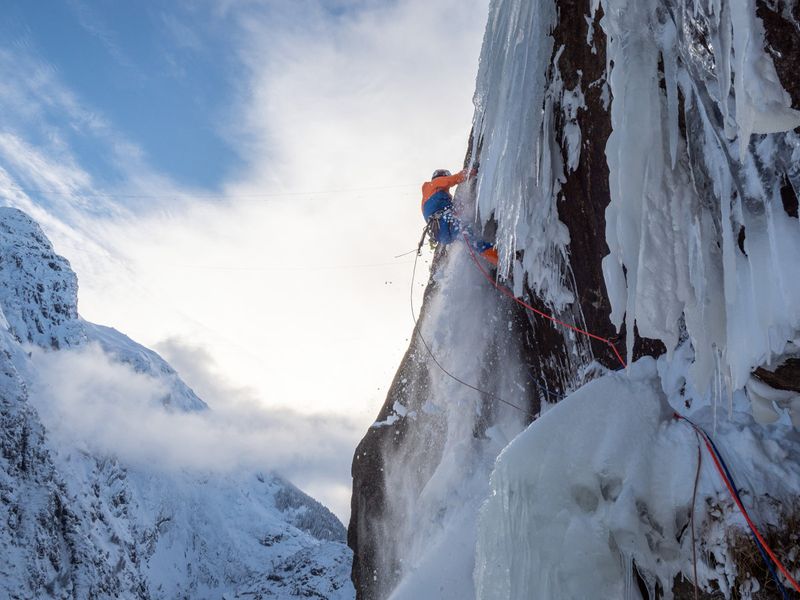
Also, ice-climbing competitions are now held. Athletes must climb an ice wall as fast as possible.
In practice, a successful climber needs a range of physical and mental qualities. So, athletes should be enduring, steady under stress and self-reliant. To reach a summit a climber has to overcome not only external but also internal obstacles.
Mountain countries that are top mountaineering hubs in the world
Switzerland
- \t
- The Alps, including the famous peaks Matterhorn, Jungfrau, Mont Blanc \t
- Well-developed infrastructure for mountaineering and mountain tourism
Austria

- \t
- The Eastern Alps with a wide selection of routes for different skill levels \t
- Popular mountaineering regions - Tyrol, Styria, Salzburg
Italy

- \t
- The Italian Alps in the north, including the Dolomites \t
- Notable peaks - Monte Rosa, Gran Paradiso, Mont Blanc
France

- \t
- Alpine ranges on the border with Italy and Switzerland \t
- The Mont Blanc massif with the highest peak in Western Europe
Norway

- \t
- Tall rocky Scandinavian mountains, fjords, glaciers \t
- Popular areas - Jotunheimen, Sognefjord, the Lofoten Islands
Kamchatka (Russia)

- \t
- Volcanic mountains with steep slopes and glaciers \t
- Unique natural conditions for high-altitude mountaineering
The Himalayas (India, Nepal, Pakistan)

- \t
- The highest mountain peaks in the world, including Everest \t
- Extreme conditions for high-altitude mountaineering
These regions, with their varied mountain landscapes and tough routes, attract climbers from all over the world, offering them unbeatable opportunities for training, ascents and testing their strength.











