



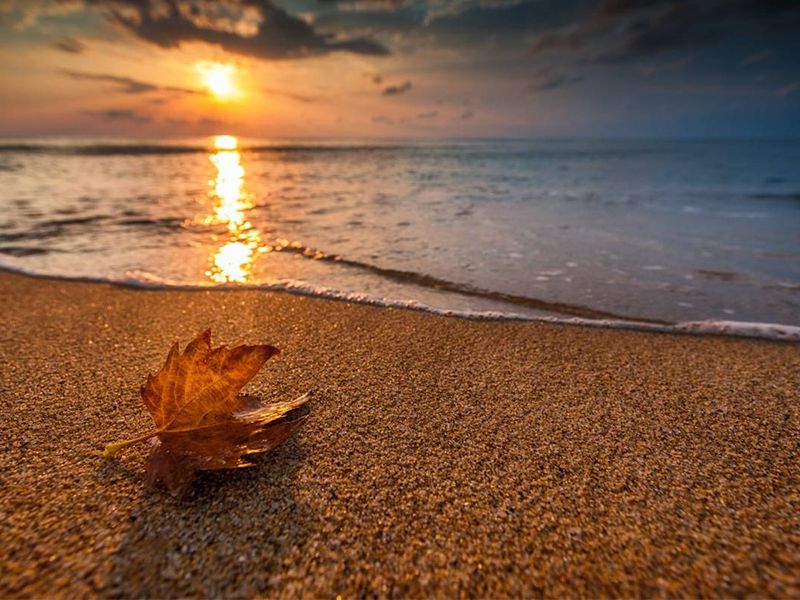
Velvet Season Routes
They say the expression "velvet season" was coined by the Russians — even before the revolution, back when the tsar's family spent early autumn holidays in Crimea. At that blessed time you can allow yourself everything — beach days, bus excursions and sea trips. The heat eases, the sun is gentler, the sea calmer, the fires that tormented Europe in summer die down, beaches are less crowded, the crowd more respectable, prices lower. In short — pleasant and worthwhile.
No-lose options

The most popular autumn destinations remain Turkey, Greece, Egypt and Tunisia, and as a backup — Bulgaria. The swimming season is in full swing, the weather is stable, average air temperature +30, water +25, and prices are reasonable. The names of the resort areas of the Turkish Mediterranean are familiar to everyone — why not try a different resort each year? Just keep in mind you can swim until the end of October only in the southern areas — Alanya, Antalya, Side, Kemer and Belek. If you like Marmaris and Bodrum — plan for September. It’s a great time for boat trips and longer excursions — for example, to Pamukkale and Cleopatra’s Pool. And traditional Turkish shopping is much more pleasant: it’s not hot, and market prices drop at the end of the season. As for tour costs — Antalya and Alanya are traditionally cheaper, Kemer, Belek and Marmaris more expensive. If in September a week in a 4* single room in Alanya costs from $510, and a 5* in Kemer from $700, then in October prices fall — in Alanya almost by half, in Kemer by $50 to $100.

The most comfortable period in Tunisia is from early September to the end of October: temperatures 23–25°C. Pristine beaches, emerald sea, lemon, jasmine and olive groves, comfortable hotels. Want to party hard? Choose Sousse — the liveliest place in Tunisia, a city of discos. A week in a 4* in September here will cost from $520. Prefer a calm, restorative break for body and soul? Go to Hammamet, home to the largest thalassotherapy centers in the Mediterranean, modeled after the French ones. Here a week will be cheaper — from $480. Prices drop by about $50 in September and by $100–120 in October. In the velvet season you should definitely visit Tunisia’s "second sea" — the Sahara Desert. History lovers get a rich excursion program: the ruins of Carthage, ancient temples, mosques, fortresses and forts, medieval Arab bazaars.

The best time in Greece is from September 10 to mid-October — warm and sunny but without the exhausting summer heat, which means that besides pure beach rest and boat trips you can also (without health risk) travel around the country. Endure 6–8 hours on a coach, get from the Halkidiki resorts to Athens and not melt at the Acropolis ruins, climb the mountains to the monasteries in Meteora without getting heatstroke — in September that’s quite possible. Also, autumn in Greece is the time of folk festivals and an abundance of fruit, wine, olives and olive oil! Don’t expect a sharp drop in prices: a week in a 4* on Halkidiki in September will cost from $490, and by October prices may even rise slightly.

Average temperature in Egypt in September–October is 30°C, the main tourist season begins — perfect time for beach rest, diving and excursions. Don’t skimp on comfort in Egypt: in September a week in a 5* in Hurghada will cost from $425, in Sharm El Sheikh from $470; by October prices rise by $50–80. Combined tours are popular during the velvet season — Sharm El Sheikh and Hurghada, Nile cruises and other options coupled with interesting excursion programs.

Bulgaria offers plenty of options for inexpensive, economical holidays. The swimming season lasts until mid-October, there’s no scorching heat — it’s an ideal place and time to travel with kids. Sandy beaches are clean and wide, the sea bottom is even, there are green park areas, children's attractions, water slides etc. A wide choice of resorts for every taste and budget, modern thalassotherapy centers, mineral springs and mud treatments, accommodation options from private cottages to expensive hotels. Prices drop by $50–120 in September. A week in a 4* will cost on Golden Sands from $300, on Sunny Beach and the Albena resorts from $380. All beaches in Bulgaria are free, Bulgarians haven’t quite forgotten Russian, and visas aren’t a problem.
"Old" Europe

In summer the Italian beaches are scorching, but in September–October you can enjoy them without hiding from the sun. The most "democratic" holidays are in popular Rimini and Riccione, with their endless sandy beaches, restaurants, nightclubs and discos: 8 days — from 25–27 thousand r. A stay on the Venetian Riviera will be noticeably more expensive — from 35 thousand r. for 8 days. If you can afford the Neapolitan Riviera and luxury resorts of Liguria (Rapallo, Portofino, Santa Margherita, Sestri Levante), prepare to pay about twice as much for the same 8 days. On the plus side, from here it’s easy to pop over to Monaco and Monte Carlo, and the French Riviera is within easy reach.
The velvet season in Italy is a fantastic time for excursions. That’s why tour companies actively offer combined tours — overview or themed city tours plus seaside or island relaxation. These can be two regions of Italy, or Italy–Switzerland, Northern Italy plus the South of France, etc. Tour prices depend on the program.

On the French Riviera the swimming season continues until the end of September. Water temperature is 20–25°C. Most beaches are free municipal ones, but there are private ones too. The Riviera is considered one of the best places in the world to relax. The most famous and most affordable center is Nice. For double occupancy a 3* hotel will cost from about 700 € for 8 days. Cannes is a calmer resort with sandy beaches — great for families: a 4* in Cannes will cost from 1000 € for 8 days. The most expensive and fashionable resort on the Riviera is the principality of Monaco — excellent beaches covered with imported fine pebbles, but prices are roughly one and a half times higher than in Cannes. If you don’t plan excursions and want to save money while renting a car, choose Saint-Tropez or Sainte-Maxime.
Combined tours are usually the Riviera plus… Paris, other French cities, Northern Italy, Barcelona, etc.
Go to Spain in September — and you’ll see the real Spain! It’s festival season: noisy, colorful holidays, corridas, bull runs and carnivals. The most famous are the Goya-style corrida in Ronda, the bull runs and Festa Major de Cardona in Cardona, Festa de la Mercè in Barcelona, and the Terrania ceramics festival in Montblanc. Velvet season in Spain is great for calm beach holidays, roaring nightlife and excursions alike. Daytime air temperature 26–28°C, water 23–24°C. Hotels offer discounts on meals and accommodation. For example, if in August 8 days in a 3* hotel on Costa Brava cost 28,900 r. for double occupancy, in September it’s already 24,600 r., and in October — 22,600 r. And that’s without special offers! The most popular combined tours at this time are Spain–Morocco, Spain–Portugal, Spain–France–Italy.
Adriatic

If you plan to spend your holiday in Croatia — hurry up: the swimming season closes in September! Croatia is one of the cleanest places in Europe, with one of the mildest climates on the continent. Most coastal hotels are set among pine forests and parks. Beaches on the Istrian peninsula (Umag, Poreč, Rabac), which nature resembles the Italian Tuscany, are mostly artificial concrete platforms, rocky plateaus and small pebble lagoons. A week in September at Istrian resorts in a 4* is from $490–550. The best are the pebble beaches of Central Dalmatia south of Split (Brela, Baška Voda, Tučepi etc.): pines grow just a few meters from the waterline, so you rarely need umbrellas. These places are especially good for families with children. In Southern Dalmatia the beaches are pebbly, rocky and concrete, while the islands near Dubrovnik have sandy beaches. Croatia is for lovers of calm holidays: swim, hike in the mountains, visit lakes, explore old towns and historical monuments, and take day trips to Venice and Trieste.
If you want a livelier time — choose Montenegro. The most prestigious and picturesque resorts are Miločer and Sveti Stefan — with sandy beaches and splendid hotels. The most fun is Budva: an ideal spot for active holidaymakers. Life here buzzes — discos, many restaurants and bars, casinos, sports fields, tennis courts, and more. Beaches are fine pebble. The resort Bečići is famous worldwide for its golden fine-pebble beach. Fancy nude sunbathing? Head to the island of St. Nicholas — part of the beach there is designated for nudists, or to Ada Bojana — one of Europe’s best-known nudist centers. The swimming season in Montenegro lasts longer than in Croatia: in Petrovac, Ulcinj and Ada Bojana — until the end of November. A week in September in Budva and Bečići (4*) starts from $800, in Petrovac it’s pricier — from $900.
On the islands

The velvet season on the islands of the Mediterranean lasts much longer than on the mainland. In Sicily you can swim until mid-November. The sea here is clean and calm, with splendid sandy beaches, bays, colorful towns and fishing villages. The best-known resorts are Sciacca, Lampedusa, Rabbit Beach (one of the most beautiful beaches in the world), Syracuse, Catania. A holiday in Sicily means swimming, fishing, diving, excursions, boat trips and, of course, lively autumn festivals. Prices in September and October are roughly the same — a week in a 4* from $800–850.
Tours to Sardinia are more expensive — a week from $1300–1800. The sea and beaches of Sardinia are considered the most beautiful in Italy — paradise for lovers of underwater swimming. Spectacular nature — grottos, caves, limestone cliffs, subtropical woods, ruins of ancient towns. Sardinia’s beaches are among the most uncrowded in Italy. The most popular resorts are Cagliari, Costa Smeralda, Cala Regina, Solanas, Torre delle Stelle, where the bathing season lasts longest. Festivals and celebrations here take place almost year-round.

Corfu is the greenest of the Greek islands, famous for its olive and orange groves, cypress forests and lemon orchards, and is considered a place for elite, respectable holidays. The velvet season lasts until the end of October. There is a wide choice of hotels here — from expensive to modest small guesthouses, and you can rent a villa or apartment. In September a week in a 4* costs from $610–650.
On Crete both party-goers and those seeking solitude, as well as families with children, can have a great time. Hotels range from budget to luxurious. A week in a 4* in September starts from $560, and by October prices fall — down to $350.
Rhodes, like Crete, will be interesting for those who want to combine beach holidays with excursions. The swim season lasts until October. The northwest coast is washed by the Aegean Sea, the southeast by the Mediterranean. Most popular resorts: Kalithea — a charming picturesque town with a palm- and pine-fringed beach and colorful architecture; Afandou, a quiet spot; Kolymbia with newer hotels; Faliraki — a trendy youth resort with golden sandy beaches. From ancient Greek monuments there are ruins, but the island also has fine medieval fortresses and palaces, an archaeological museum, old mosques and Turkish baths. A week in September will cost from $700; by October prices usually fall by $100–150.

The velvet season in Cyprus runs from September to December. The most popular resorts are Paphos, Limassol, Larnaca and Ayia Napa. The sandy beaches of Ayia Napa in picturesque bays are considered the best. Those who love noisy beach parties, open-air night discos and youthful resort atmosphere flock here. Families with children should head to Protaras: quiet, wild nature, secluded coves, crystal-clear water. There are also underwater caves that attract divers. Cyprus has sights to see: Idalion — an ancient kingdom near Nicosia, Tamassos — royal tombs, Byzantine churches and, of course, the famous Aphrodite Beach — the birthplace of the goddess of love. Hotels range from 5* to budget pensions. A week in September in a 3* in Limassol or Larnaca will cost roughly $500–560.
The velvet season is a wonderful opportunity to extend summer, enjoy comfortable holidays and get the most out of your travels.














