




A short booze guide
Try it yourself, you absolutely should — so later at home with friends, eyes dreamy and rolled up, you can chat about the taste of real Champagne (from the Champagne province), or argue about the differences between Scotch and Irish whiskey. Or just tell them what kind of homemade wine they're making in the Caucasus these days.
Japan

Well, of course, sake. Real sake is only about 20 degrees, and they serve it in special clay flasks the size of a cup. So, when you get back home you can proudly say something like "we and my friend Yasubari took a handful of sake bottles and smashed them out in the countryside under a sakura… and — believe it — it still wasn’t enough!". True story. Although, if you drink the Japanese way — in tiny portions — it might well be enough. Drinking that way intensifies the buzz. There's even an old student trick: pour a bottle of beer into a soup plate and eat it like soup with a spoon. You can get drunk from a single bottle.
By the way, about beer. For those who can't live without it so much that they don't even want to drink sake in Japan — I can recommend traditional Japanese beer with a pretty decent taste and a fancy name that sounds a bit indecent to Russian ears.
France

France and wine are inseparable. Here the choice of drink depends on the region you're in. For example, Parisians recommend visitors drink Bordeaux or Champagne. If you end up in Provence, locals will suggest washing down the wonderful food with a rosé Cote de Provence or Bandol Rose. In the southeast of France it's best to drink red wine from the local vineyards. Literally find out the name of that vineyard outside town and compare it with the bottle label — it should match.
Besides wine, cocktails are popular in France. In Paris you'll find all sorts of exotic stuff: Long Island, Mai-Tai, Weng Weng. In Provence the traditional strong drink is pastis (45–50 degrees), made from anise. Locals usually dilute pastis with water 50:50 and drink it with ice. On the coast a popular drink is perroke — pastis with mint syrup and ice. One of France's symbols — absinthe — is banned in the country now, but in the French Alps it's often substituted with chartreuse and genepi (50–60 degrees). They serve them freely but strongly recommend diluting. By the way, absinthe is still sold illegally in Paris — look for small signs in windows with the drink's name.
Ireland

Guinness, a thousand times Guinness. Nowhere does Guinness have such a gentle creamy foam and taste as in Ireland — where it was invented. No kidding. It's very different from what we drink at home or even in Germany — Irish Guinness is smoother and fuller in flavor. The best Guinness can be tried in Dublin, at the brewery. In the 19th century they poured it free there, but now you might get a pint as an add-on to a tour — which, by the way, doesn't necessarily include an inspection of the production.
If you can drink something other than Guinness, then it's probably whiskey. Ireland and Scotland still argue over who invented it. The official version says whiskey, like Christianity, first appeared in Ireland (thanks to St. Patrick) and almost immediately crossed the sea to friendly Scottish tribes. Irish whiskey tastes milder than Scottish and is cheaper. Actually, everything is cheaper in Ireland. Whiskey on the island is added to almost everything — including coffee. Irish coffee is the peak of gentleness: whipped cream, coffee and whiskey — a favorite drink of women. The same goes for Baileys — unlike a real draft Guinness you can buy Baileys in Duty Free and take it with you.
Greece
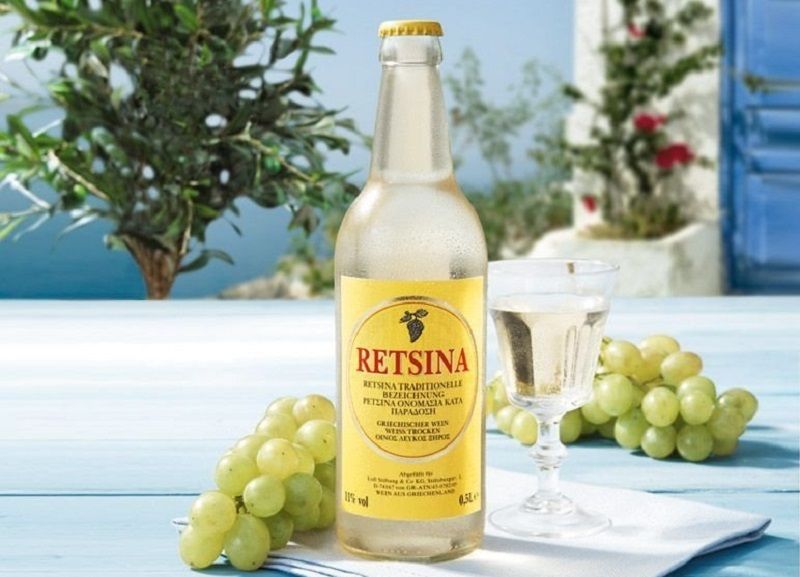
Retsina is a special type of wine aged in resin barrels that has a resinous taste. If retsina isn't your thing, you can drink ordinary local wines — the white Hatzimichali, the red Boutaris and Mavrodaphne — a very sweet and strong wine like port. Greeks quite often drink ouzo — the local anise-flavored spirit. As for other strong drinks, try the Greek Metaxa. The junk they sell in our shops has little to do with the real Metaxa. In Greece the quality of Metaxa is much better than the export stuff. Choose five- or seven-star bottles so you don't get unlucky.
America

In America you should eat more than drink. Drinking there isn't the main thing. Well, it's done, but usually at home, quietly, by oneself. Showing off that you can drink more than a couple of watered-down drinks before dinner is frowned upon. One serving of a drink contains about 30–40 grams of alcohol. Pubs also have the concept of a shot — a blast. One shot is one ounce (29.5 g) of something strong, like whiskey (which is often worse than Scottish). So if you order a double whiskey in a pub, you'll only get about 60 grams. Better to stick to cocktails. The most famous is the Screwdriver — vodka with orange juice. The most popular is Helloween: 30 g whiskey, 50 g orange juice and 10 g lemon juice.
Italy

'And he climbs to his room aboard via the gangway/ the guest carrying grappa in his pocket/, a perfect nobody, a man in a coat/, who has lost his memory, homeland, son,/ on his back the aspen weeps in forests/, if anyone cries for him at all'.
Murmur these lines from Brodsky, uncork a bottle. Grappa is the drink of the abandoned. It's made from pomace — the grape leftovers after all the juice for wine has been taken. It becomes a kind of brandy. Sometimes with a strange aftertaste and a faint smell of fusel oil. However, if you happen to be in the Fazi-Battaglia region, they might serve you a charming golden grappa of very high quality. On local private estates grapes are pressed with a special soft press, so the pomace still contains a lot of juice. And to not waste it, after distillation the product is well purified — and the grappa turns out quite decent. Drink grappa, but only if the wonderful Italian wine no longer cheers you up.
Czech Republic

Beer, beer and beer again! Naturally, draft. A mug of beer in the Czech Republic costs less than at home, and the quality is excellent. If you want to fully enjoy this drink, go to a small restaurant that has its own brewery. They're easy to find. First, they usually advertise it at the entrance; second, inside you'll immediately see two giant closed vats. That's a real microbrewery built right into the restaurant, small and for the needs of that establishment only. The beer quality in such restaurant breweries is often higher than that of ordinary factory-made Czech beer.
Netherlands

The usual Dutch drink is beer, and the famous Heineken is not much loved by local snobs. But, well, that's what makes them snobs. If you find yourself in Amsterdam, it's best not to drink at all. Because at the end of the day you'll probably, even out of curiosity, drop into a coffeeshop (a special café where they sell and smoke marijuana), and there the local tourism pros will have no trouble "selling" you a fragrant joint: marijuana is legalized in the Netherlands. Mixing drinks with grass or hashish will make you feel pretty bad.
True Amsterdammers deeply despise 'stupid tourists' who mix booze with weed. And for good reason. Local strains of hashish and marijuana are too strong to mix with anything else without harming your health and your sense of spatial orientation. So if you've had a beer — stick to it, don't smoke, no matter how sincerely you're offered.
Finland

Besides the usual vodka exotica, Finland has wonderfully strange liqueurs: cranberry, cloudberry (Lakka Liqueur) and sea-buckthorn. They don't make these anywhere else. They're really worth trying. But be smart: in Duty Free at the border they cost $5, while in Finland itself they are almost $15. All alcohol in Suomi is very expensive, not just liqueurs, so stock up in advance. As much as possible — maybe a liter per person.











