




Which skis are right for you and how do you pick them?
Skis come in all sorts of lengths, widths, weights and Flex models. Most modern skis have that hourglass-shaped construction. Ski and gear makers divide skis into three types: recreational, touring and sporting. The first two are the most popular. Recreational skis are for those who like to nip a few kilometres in sunny weather through a park or a field, while touring skis are for fans of little "marches" into the woods (usually ending by a campfire with shashlik) or for long family walks (again, in the forest). That doesn't mean you can't take recreational skis on a trek or ride a kilometre or two on touring skis, but it's wise to decide before buying what you'll actually use the skis for.

These days most models on the shop shelves are plastic. But you can still find wooden ones (they're cheaper and, in terms of glide, not much worse than plastic). In above-freezing temperatures wooden skis behave poorly — snow clumps on them even with good wax, while plastic ones don't mind a thaw and will still slide. Regardless of the brand you pick, skis fall into several main types: beginner skis, alpine skis, freeride skis, freestyle skis, cross-country skis and powder skis. Short skis are unstable at higher speeds. The longer the skis, the better they are at high speed, but they'll be less responsive when turning.
If the shop has soft and stiff skis — take the soft ones. They'll make turning easier when you finally hit the slope. But it depends on your weight: the heavier you are, the stiffer skis you need. A normally stiff ski can be squeezed in the middle by pressing two skis together with two fingers on their sliding surfaces. If you've just learned to ski, the best (and most affordable) choice is a pair of beginner skis. They're made from the same materials as regular skis but are usually lighter, softer and easier to manoeuvre. Beginner skis are usually sold shorter in length so it's easier to turn and stop.
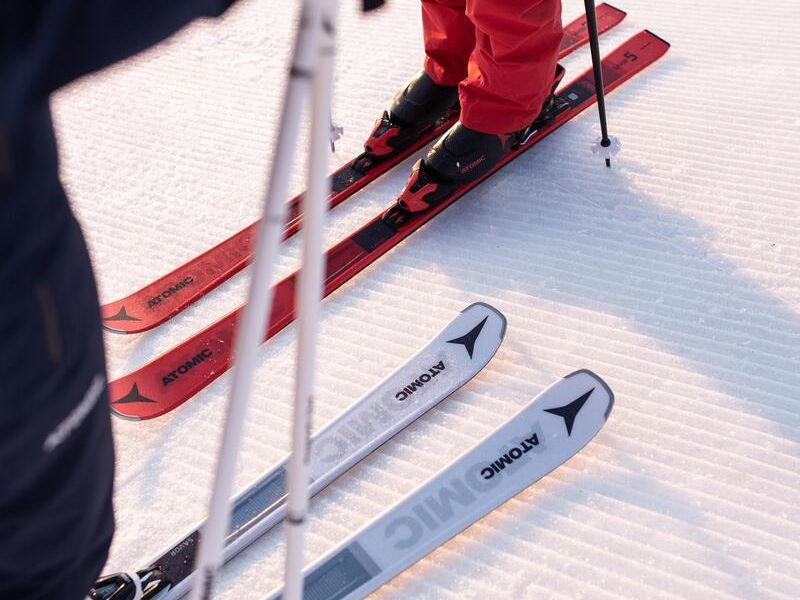
Beginner skis: * women's — available from 120 to 150 cm. * men's — sold from about 140 to 160 cm. Remember: ski length should be roughly equal to your height. How roughly? Look. If you're a very bold and strong guy or you expect to grow a bit and won't be able to buy new skis in a year or two, pick skis about 20 cm longer than your height. That's the traditional option, but be ready for more difficulty. Skiers of all abilities can enjoy freedom on alpine skis — they're easy to turn and work well on ice, slopes and in snow.
Alpine skis are a bit longer than beginner skis. If the mountain is all yours, you can enjoy freeriding. Freeride skis are made to handle all kinds of snow; they're comfortable, usually wider than typical alpine skis, and meant for those who crave adventure and want to explore the mountains. There are freestyle skis — lighter and shorter than other types. Cross-country skis are built for quick response and rapid turns, not for the faint-hearted — they're tricky to ride and are usually much more expensive. Using cross-country skis also requires special knowledge about maintenance and tuning.
And most importantly, when buying skis make sure they're straight. How? Lay the skis side by side on something flat and long enough (say, on the shop counter). Press down on them from above, watch their "behaviour" and compare how each reacts to the pressure. Look at them in profile, from the front and from the back. A ski lying on the counter shouldn't wobble from edge to edge. Then check the sliding surface: make sure the groove isn't crooked and that the metal edges are smoothly embedded into the plastic base.











