




How to choose a hotel?
In this article we'll try to help a traveler and explain what criteria you should use to choose a hotel.
What do you expect from a hotel?

If you picked a beach holiday, then 80–90% of your time will be spent on the hotel grounds. The room, service, food, entertainment, extra services — all of that shapes your travel impressions. If you're going with kids, check right away whether the hotel offers childcare services, entertainment programs, or amusement parks. And conversely, if you want a quiet, romantic trip, you probably won't need those extras.
It's a different story when you go on a sightseeing tour and it doesn't really matter where you end up after the tour, as long as there's a bed and a bathroom — then pleasing you is easiest, because for you the hotel is just a place to sleep and store luggage. In that case the hotel's location becomes more important than the level of service, and you should pay attention primarily to how quickly you can get from there to the main attractions.
It's useful to know the features of hotels in the country you're heading to. Beach holidays in Spain or Italy, for example, don't mean you'll spend 80–90% of your time at the hotel; quite the opposite, so hotels there often don't have animation or a wide variety of extra services. Therefore, when vacationing on European beaches it's better to pick hotels by location or resort, and don't be upset on arrival because there are no water slides.
Resort
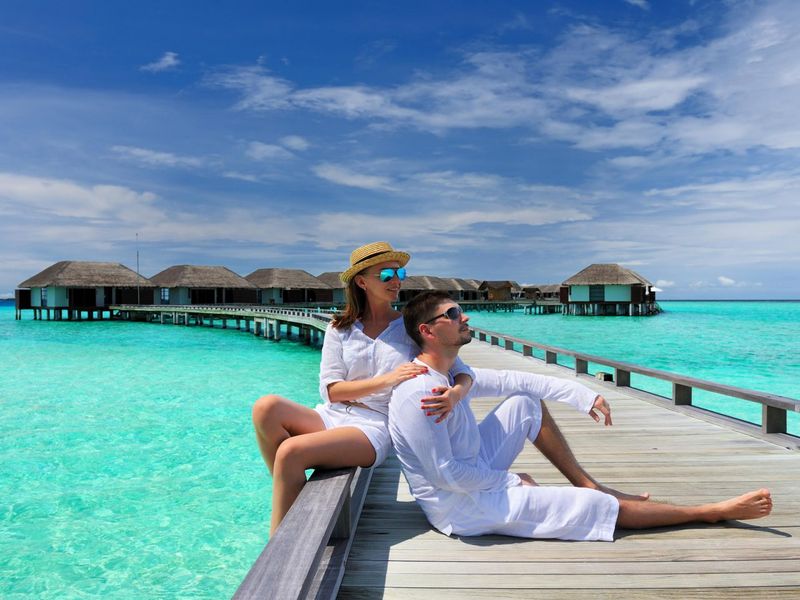
When choosing a resort, ask if there are distinctions in that country between more prestigious (and thus more expensive) areas and less prestigious, more budget-friendly ones. Resorts can be geared toward younger crowds or, on the contrary, for older visitors. Resorts might be very close to each other yet aimed at people with different budgets. Check what infrastructure is around and how much a dinner in a neighboring café might cost.
Your budget

How much are you ready to spend? It's important to know there's no universal standard for hotel star ratings across all countries. Expecting a nice 3* hotel, the agency might offer a not-so-good hotel but labeled 4* at the same price. Everyone decides for themselves: on one hand, service in a 4* will usually be better than in a 3*, but prices for extras like dinner in a nearby restaurant or calling a taxi will be noticeably higher.
So what makes a hotel 'good' or 'bad'? Of course, how well the hotel fits your own needs. Sometimes guests feel much more comfortable in a modest 'three-star' hotel than in an expensive five-star one, simply because they don't want to swap shorts for trousers at dinner. So don't chase the stars; they might not meet your expectations.
There is a rule of thumb: more stars usually means better, but try to abstract from the star rating when choosing a hotel and start by reading descriptions and looking at photos, then gather as much information as possible about a hotel you like.
Star rating

The more stars, the better the hotel is considered. That's a general rule. But hotels can have many different classifications, from stars and letters (as in Thailand) to crowns, keys, etc. Star ratings are common in many European countries.
Greece uses letter designations, where D equals 5*, A equals 4*, B equals 3*, C equals 2*. United Kingdom uses a star classification. Even a 1* hotel can have all conditions for normal lodging without luxury. For more private accommodation categories there are special labels, for example a 'family' hotel (a small hotel for one family) — 'diamonds', apartments — 'keys'.
France uses a star classification too. However you won't find many 5* hotels there; such hotels are equated by their service set to 4L (L-luxe). 2–3* hotels are chosen by tourists looking for active holidays. The conditions are good, but that's about it.
Italy is almost like France: generally there aren't many 5* hotels, except in elite resorts and big cities. But 4L hotels are not equated to 5*. They're still 4* hotels but with a larger set of services.
Turkey has a star classification. However, comfort quality in lower-category hotels can leave much to be desired. For example, agencies may not even offer 2* hotels. Most entertainment and extra services in higher-category hotels are included in the price.
Malaysia also uses a star classification, but the service level is much higher. For example, a 4* hotel there could confidently be equated to a European 5* hotel.
Remember that the set of services for hotels of the same category can vary between countries. If you're used to the spacious rooms of Egypt or Turkey, you won't find the same in a European hotel of the same category.
Meal plan
BB - breakfast, HB - half board (meals twice a day), FB - full board (3 meals a day) and the 'All inclusive' system. If you chose a European resort, don't worry — restaurants and cafés offering all kinds of food are everywhere. If you picked a southern exotic destination, think ahead about possible stomach troubles from exotic food. Choose HB or FB hotels so you don't have to wander local restaurants.
Discounts and special offers
Always ask the agency why the price is reduced for a given period. A low price might hide construction work under your room window. Or your window's view might face a neighboring building.
Check-in and check-out
In most hotels check-in is at 14:00 and check-out at 12:00; for apartments it's usually 17:00 and 12:00. So if you arrive early in the morning and leave in the evening, ask your agency to arrange early check-in and late check-out. Of course, that may cost extra; if not, be prepared to spend some time in the reception waiting for a free room. If you don't vacate the room on time at check-out, you'll be asked to pay for extended use (typically if you leave later than 18:00 they'll charge a full night's rate, even if you stayed only 4–6 hours extra).
It's also worth finding out the distance from the airport to the hotel and whether the agency provides transfer.
Extra services at the hotel

First of all, when going to a hot country, find out whether your room has an individual air conditioner or a split-conducting system (a 'split' system that's 'shared'). Will there be a safe in your room?
Are floors in your hotel divided into smoking and non-smoking floors? Which way do the windows face? That's important both for sea-view lovers and for those whose hotel is in the city center. For the latter, a beautiful city view can be spoiled by nighttime noise or tram tracks right next to the hotel, so either ask about double-glazed, noise-insulating windows and enjoy the view, or take a room facing the inner courtyard.
If you chose a beach holiday, ask how far the hotel is from the shore (better to know the distance in meters, not minutes).
Is there a free beach with sunbeds at your hotel (often sunbeds have a separate charge)?
To avoid boredom in bad weather, check in advance if your hotel has a gym, pool, sauna, etc.
Find out what you have to pay for and how much, and which services are free.
Traveler reviews
Often traveler reviews are decisive when choosing a hotel. Rely only on reviews from people who have just returned. Reviews from a year ago aren't very relevant — for example, the manager might have changed and now things and rules in the hotel are completely different.
As you can see, there are many key points to pay attention to. Most tourists realize how important these are only after they arrive at the hotel. Don't repeat their mistakes — don't be afraid to ask and get details from the agency. The more questions you ask and details you clarify, the lower the chance of disappointment on arrival.











